Asahidake, the Best Place to Ski Early in the Season
While Furano Ski Resort officially opened on November 29th this year, the early days of the season were, frankly, a bit underwhelming. Until the first week of December, snowfall was minimal and coverage was thin. When the first major snow system finally arrived from Siberia, conditions improved dramatically—but even then, only a single lift at the very top of the mountain was running. The snow itself was excellent, but with just one lift open, skiing became repetitive if you were planning to spend the whole day on the slopes.
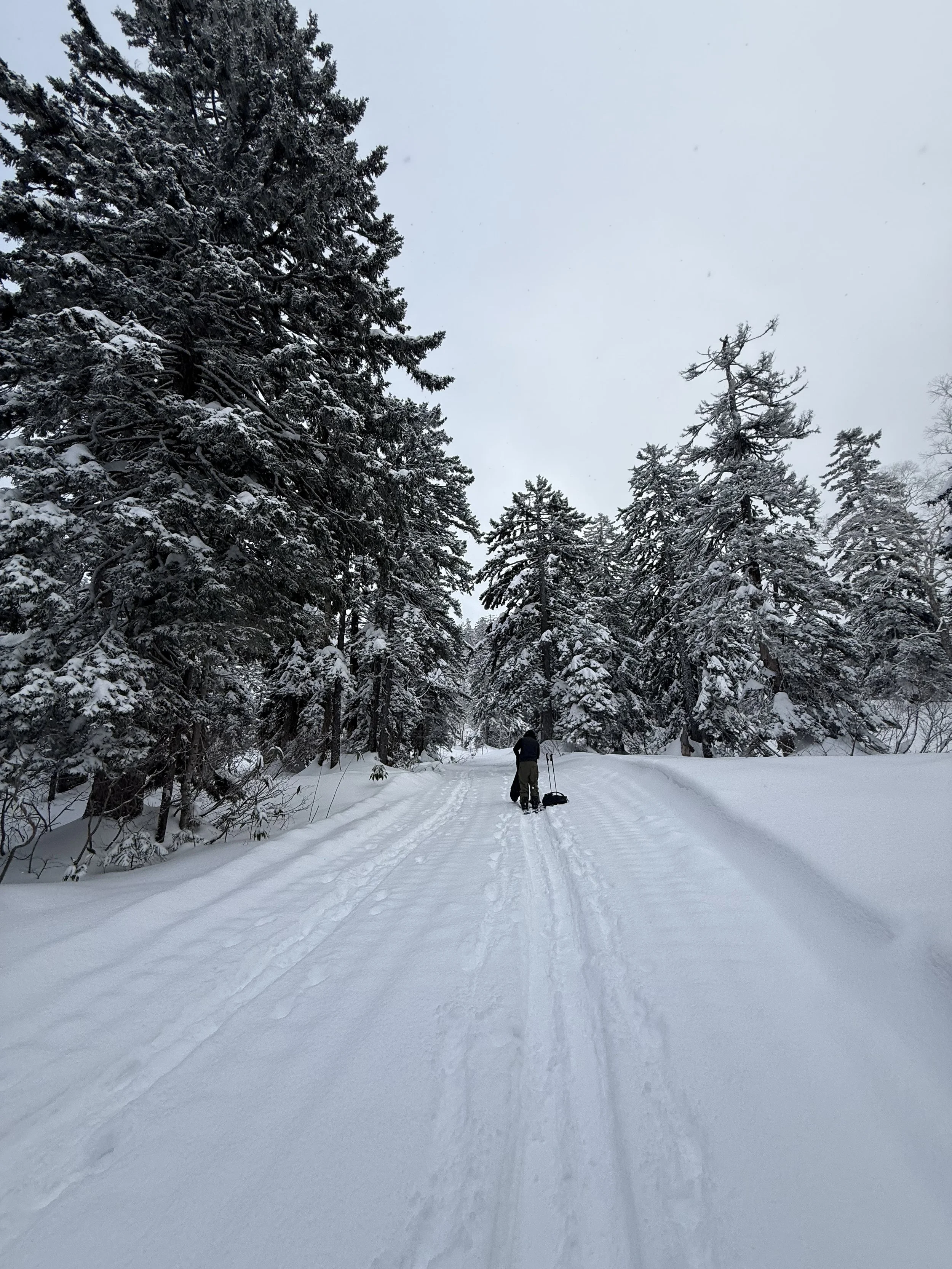
The path starts out gentle and is usually well-trekked, at least up to the gondola station.
For more adventurous skiers, however, there was already one standout option offering truly fantastic early-season conditions: Mt. Asahidake. At 2,291 meters, it is the tallest mountain in Hokkaido and sits about 1 hour and 20 minutes from Furano by car. Thanks to its altitude, Asahidake often holds deep snow well before most other resorts are fully operational. In fact, the base station of the ropeway is already at roughly the same elevation as the top of Furano Ski Resort, making reliable snow coverage almost a certainty from late November onward.
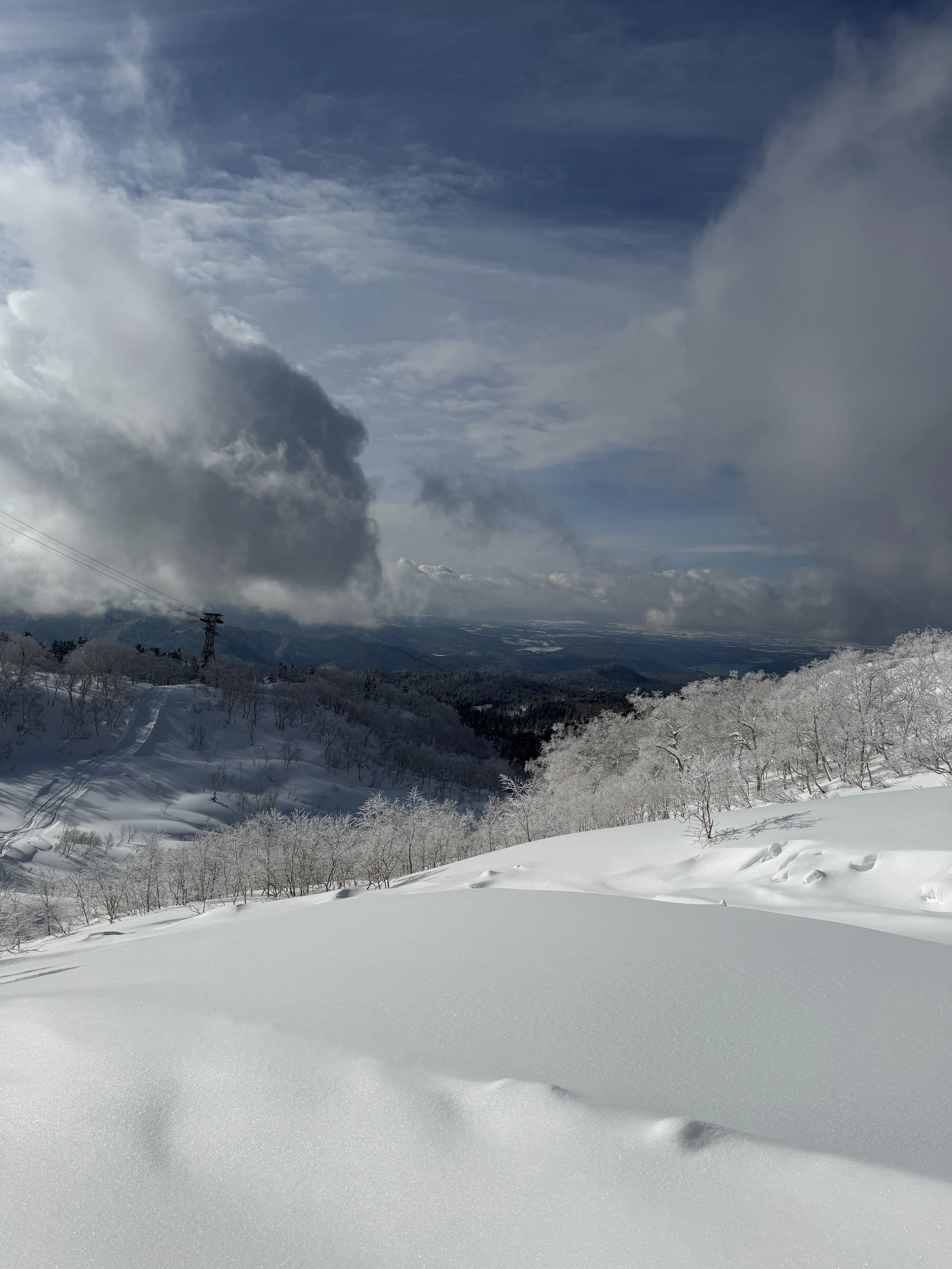
On clear days one can enjoy unparalleled views across central Hokkaido.
The trade-off is that Asahidake is not a conventional ski resort. There are no groomed runs and no chairlifts, and the gondola only starts operating late December. Instead, you earn every turn by hiking or ski touring. This is serious backcountry terrain and should never be approached alone or without proper safety equipment and experience. That said, there are many professional, licensed guides operating in the area who can take you safely, and guided tours are highly recommended for anyone without extensive backcountry experience.
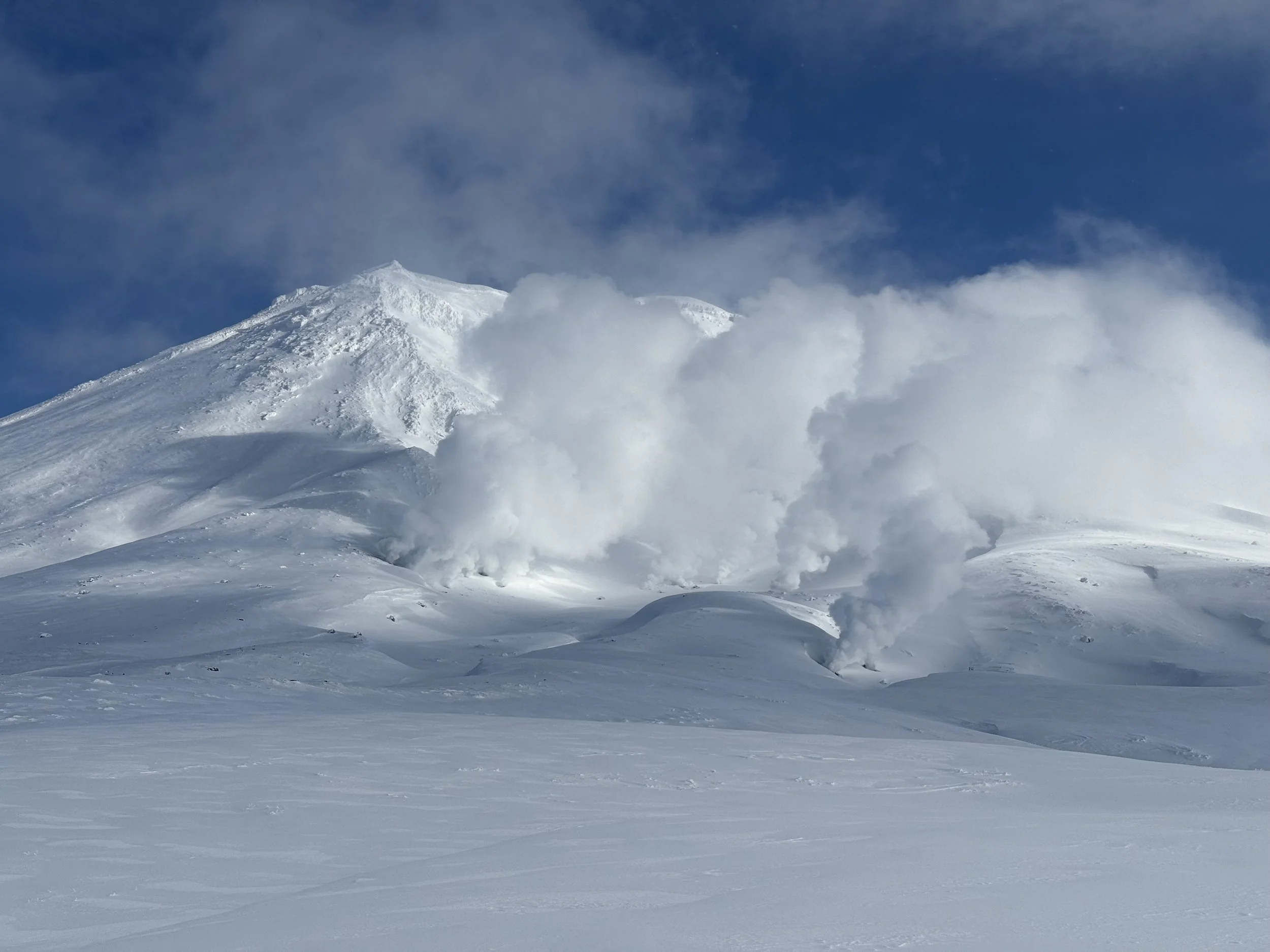
Yes, people do ski down through these vents. But it’s dangerous so don’t even try it without a guide.
From the base area, it takes roughly two to two and a half hours to hike to the top of the ropeway station. Many skiers choose to ski down from there, enjoying about five minutes of exquisite, untouched powder before reaching the halfway point and then skinning or hiking back up for another lap. For those with the fitness, time, and experience, it is also possible to continue all the way to the summit, which adds another two to three hours of ascent. From the peak, you can ski down through dramatic volcanic steam vents, creating one of the most unique ski experiences in all of Japan. It is also extremely dangerous without the right knowledge and local guidance, so a properly licensed guide is essential.
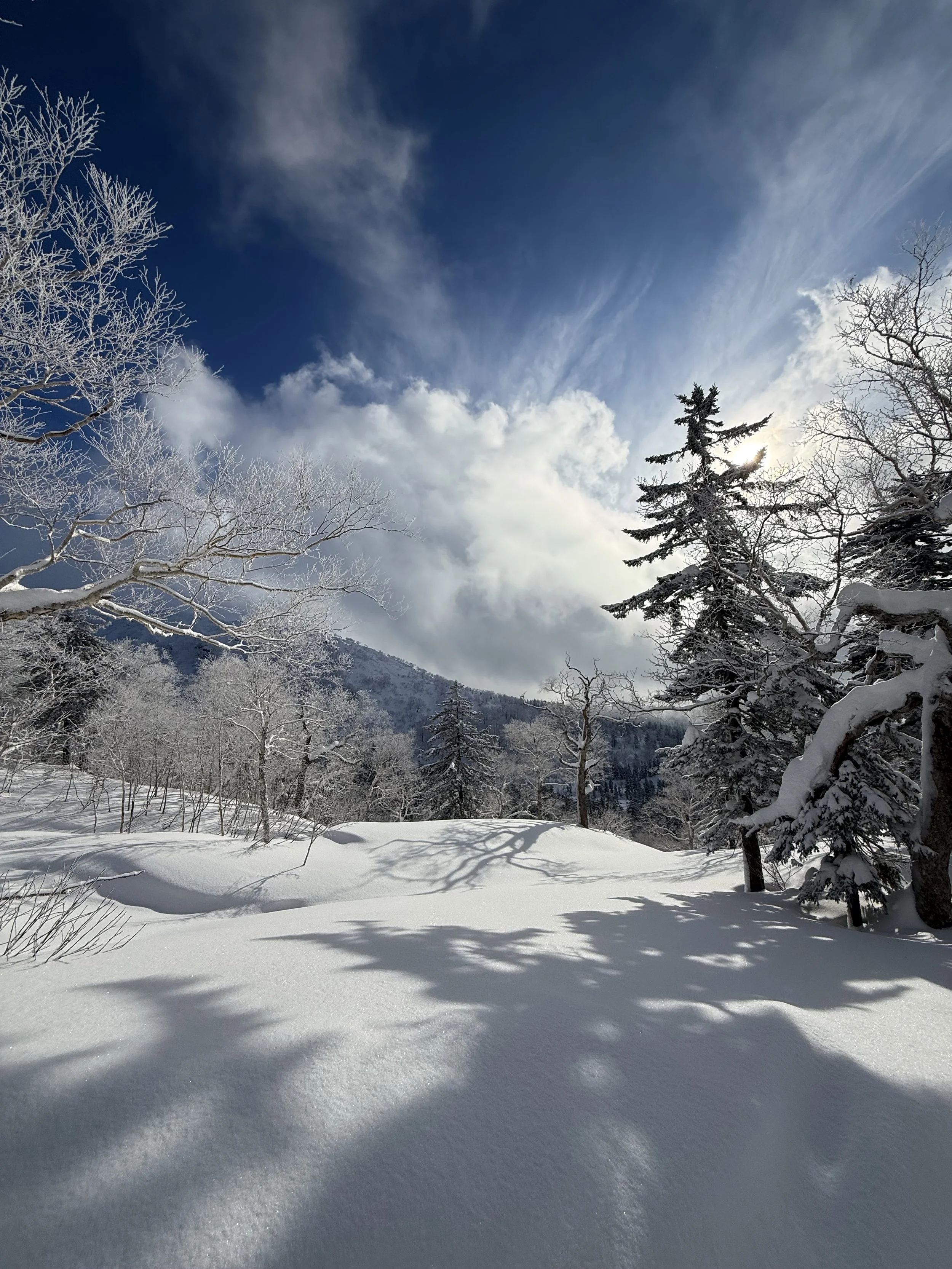
Especially early season you’ll be able to see virgin snow and untouched landscapes.
The Asahidake Ropeway typically begins operating around December 10th, with skiers allowed to use it from around December 25th (always worth confirming directly with the ropeway before planning your trip). Once it opens, you can skip the long hike and access high-alpine powder far more easily. Another major advantage of Asahidake is how long the season lasts. The mountain remains skiable well into March and often even into April, making it an excellent option not only for early-season turns, but also for spring skiing long after most lower-elevation resorts start to close.
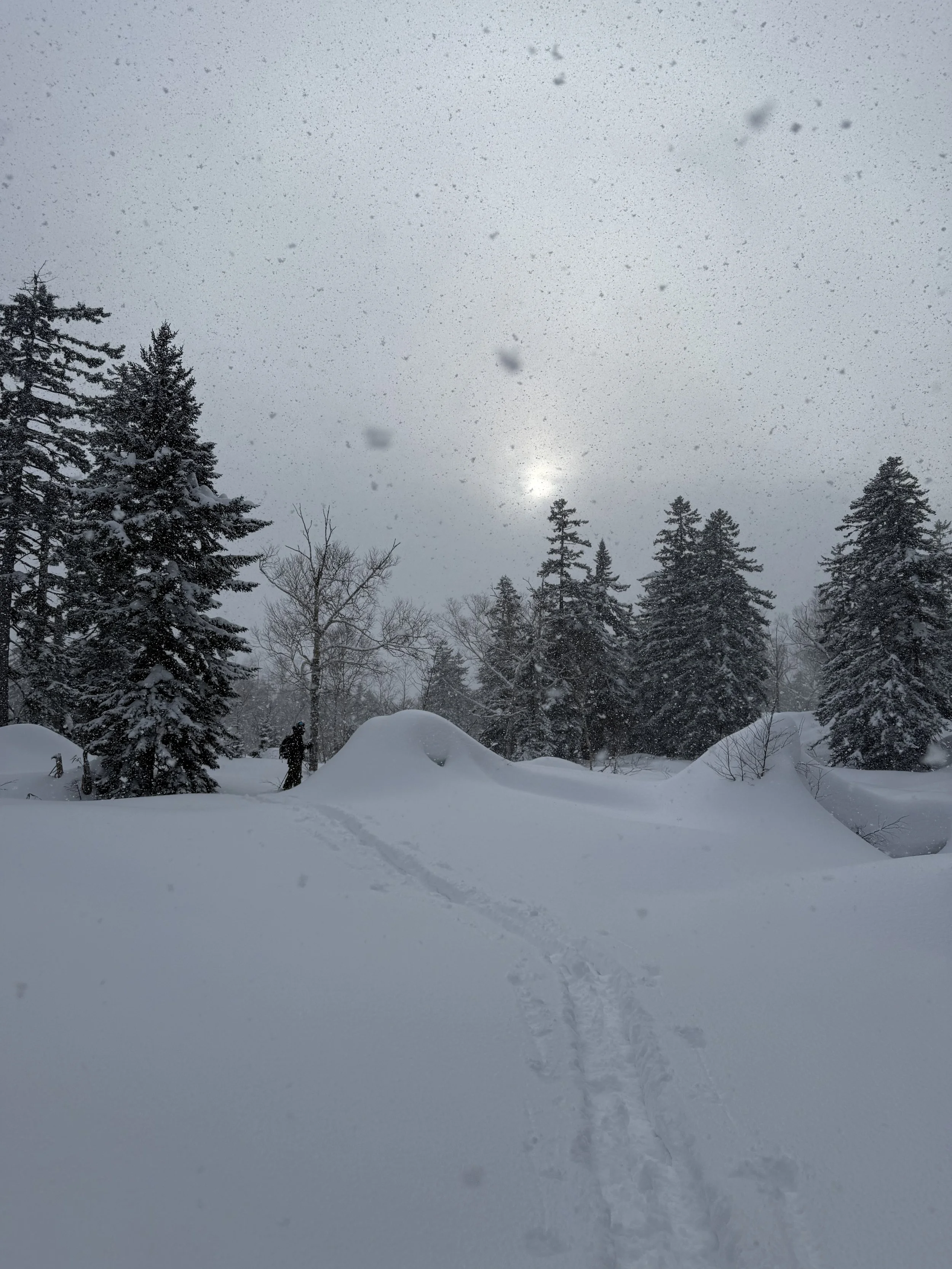
The way back also needs to be earned and without the proper equipment it’s easy to get lost.
